
>
A.L. Lloyd >
Songs >
Polly Vaughan / The Shooting of His Dear
>
Anne Briggs >
Songs >
Polly Vaughan
>
Martin Carthy >
Songs >
The Fowler
>
Peter Bellamy >
Songs >
The Shooting of His Dear
The Shooting of His Dear / Molly Bawn / Polly Vaughan / The Fowler
[
Roud 166
/ Song Subject MAS290
; Master title: The Shooting of His Dear
; Laws O36
; Henry H114
; Ballad Index LO36
; VWML SBG/1/3/43
, GG/1/17/1087
, GG/1/19/1175
; Bodleian
Roud 166
; Molly Bawn at Fire Draw Near
; Folkinfo 50
; DT POLLYVON
, POLLVON2
; Mudcat 159967
; trad.]
Sabine Baring-Gould, Henry Fleetwood Sheppard: Songs of the West Nick Dow: Southern Songster Gale Huntington, Lani Herrmann, John Moulden: Sam Henry’s Songs of the People Maud Karpeles: Cecil Sharp’s Collection of English Folk Songs A.L. Lloyd: Folk Song in England Dáibhí Ó Cróinín: The Songs of Elizabeth Cronin Colm O Lochlainn: Irish Street Ballads Roy Palmer: Everyman’s Book of British Ballads Frank Purslow: Marrow Bones Cecil J. Sharp, Charles L. Marson: Folk Songs From Somerset
Harry Cox of Yarmouth, Norfolk, sang this tragic ballad as The Fowler in the Sutton Windmill, which was recorded by E.J. Moeran, was broadcast on the BBC Third Programme in late 1947, and published in about 2000 on the Snatch’d From Oblivion CD East Anglia Sings. Harry Cox also sang Polly Vaughan, in a recording made by Peter Kennedy in December 1953, on the anthology Fair Game and Foul (The Folk Songs of Britain Volume 7; Caedmon 1961; Topic 1970), and he sang The Fowler in another recording made by Mervyn Plunkett on 21 October 1959 on his 2000 Topic anthology of traditional songs and tunes from a Norfolk farm worker, The Bonny Labouring Boy. The Caedmon album’s booklet noted:
Because the early great ballad scholars had a very rigid model in mind by which they judged the excellence and authenticity of the ballads they chose to publish, they frequently missed songs of great antiquity and beauty that came into their hands in broadside form. This song is a case in point. Jamieson, in Popular Ballads and Songs (1806), commented, “This is indeed a silly ditty, one of the very lowest descriptions of vulgar English ballads which are sung about the streets in country towns and sold four of five for a alfpenny.” In fact, however, this story probably enshrines a fragment of one of the age-old myths of North Europe—the transformation of a maiden into a bird by some jealous person. This theme occurs in many legends and is the basis of the famous ballet, “Swan Lake”.
The present form of the ballad is popular throughout England, Ireland, and Northeast America. Sharp esteemed it and felt that its supernatural theme and its melodic pattern indicated a Celtic origin. Lucy Broadwood recorded a tune in the West Highlands of Scotland attached to a similar text. Joyce remarks that his Irish version is the same air that Thomas Moore used for Come Rest on This Bosom. In some version, the girl is mistaken for a fawn rather than a swan, an idea which is frequently found in Danish songs of the same theme.
… and Steve Roud noted on Cox’s Topic anthology:
Under many titles such as Molly Bawn and The Shooting of His Dear, dozens of versions of this song have been collected across England, Ireland, North America, and Australia, and it was clearly a favourite with traditional singers. Nevertheless, it seems strangely absent in Scotland, and nor were there as many 19th century broadside printings as would be expected from its later popularity. On the available evidence it originated in the early 19th century.
Séamus Ennis recorded Molly Bawn on 21 September 1949 in Dublin (BBC recording 13776). A 1951 recording of him by Alan Lomax was included in 1955 on the anthology The Columbia World Library of Folk and Primitive Music – Volume I: Ireland and on the albums’ 1998 CD reissue on Rounder whose booklet notes:
Known in England as Polly Vaughn” and in the United States as The Shooting of His Dear, this come-all-ye reworks an ancient folk theme. In the Hebridean version, it is the cruel mother who advises her son to shoot a swan, even though she knows that the swan is his true love.
Louis Boutilier from Tantallon, Nova Scotia, sang As Jimmy Went A-Hunting to Helen Creighton in August 1950. This recording was included in 1962 on the Folkways album of Maritime Folk Songs from the Creighton collection. She noted:
The Maritime Provinces are rich in stories of the supernatural, and these appear as personal experiences, as yarns told for fun, and as songs. In some, like The Dreadful Ghost, a girl who has been abandoned dies of grief and then follows her lover to sea where in sight of all the crew she forces him to follow her and they both disappear in the deep, a terrifying thought. In others like The Silvery Tide and As Jimmie Went A-Hunting, a mystery is solved by a dream, in the former revealing the drowned body floating on the tide, and in this one explaining the facts of an accidental death and thereby saving a lover’s life.
Mr. Louis Boutilier who sang it was a small sprightly man of eighty-seven whose eyes were bright and alert, and he loved his little joke. After listening to his voice on my tape recorder, the first he had ever heard, he said, “Who sings better, that man or me?” Although this song has often been found in Great Britain and the United States as Molly Bawn or At the Setting of the Sun, I have it only from one other singer, also a Boutilier. One lived east of Halifax, the other west.
Elizabeth Cronin of Ballyvourney, Co. Cork sang Molly Bawn in a recording made in the early 1950s that was included in 2012 on the Topic anthology Good People, Take Warning (The Voice of the People Series Volume 23) on which Steve Roud noted:
Very widely collected in England and Ireland, but not, apparently, in Scotland, and with well over a hundred North American versions, this ballad of accidental death clearly caught many singers’ fancy. For such a popular song, surprisingly few broadside printings have been identified, but a handful of 19th century sheets are known, including Pitts (London), Kendrew (York), and Nugent (Dublin), but the song is at least a few decades older than these, as it was already printed in songsters in the 1780s and 1790s. The name of the victim varies a fair amount—Molly or Polly, Bawn, Bond, Ban, Vaughan, and so on—but the story is remarkably stable, which can be taken as a measure of its success in narrative terms. Some commentators have tried to make something of the ‘supernatural’ element of Molly’s ghost appearing in Jimmy’s defence, and have even assumed a connection with earlier legends of swan maidens, but there is no evidence of any such connections.
A.L. Lloyd sang Polly Vaughan in a 1951 BBC recording that has been included in the Alan Lomax Collection CD World Library of Folk and Primitive Music: England. He also sang it in the early 1950s on his 78rpm record The Shooting of His Dear / Lord Bateman and on the 1956 Riverside LP Great British Ballads Not Included in the Child Collection. Both of these recordings had the title The Shooting of His Dear. The former was reissued in 2008 on Ten Thousand Miles Away and the latter in 2011 on Bramble Briars and Beams of the Sun; both anthologies are on the Fellside label. Vic Gammon noted on the last compilation:
This was obviously one of Lloyd’s favourite songs. He issued no less than three recordings of it in the 1950s. The song is said to embody “the folk belief that a spirit may return to rescue a loved one from danger”. Jennifer O’Connor has assembled and studied 88 variants of the song from different parts of the world. O’Connor, taking a cue from the Irish collector Patrick Joyce, makes a good case that the song is Irish in origin and based on a real happening although she feels that the song “has retained two major mythological beliefs: the belief in ghosts, and in transformation of the soul”. Lloyd devotes a page to the song in Folk Song in England and characteristically comes down on the side of the mythologists. He links it both to classical mythology and to wider folkloristic beliefs, invoking his much used tactic of drawing on his wide knowledge of song and folklore (particularly from Eastern Europe). Such a tactic impressed many and continues to impress some, but says little about the culturally specific nature of folklore. In any case, fact and mythology are not mutually exclusive; on the contrary, the power of myth in people’s lives, as a way of dealing with and interpreting ‘reality’, is palpable. Myth is often the way we interpret ‘reality’.
The song has remained popular, whatever the significance of these discussions. [Robert] Jamieson’s estimate of it as “paltry stuff” did not accord with the estimate of the people who kept it alive for generations. Jamieson’s view of the ballad is worth quoting, he articulates an early expression of something close to Child’s notion of collections broadside ballads as veritable dunghills:
This seems to be one of the very lowest description of vulgar modern English ballads, which are sung about the streets in country towns, and sold, four or five for a half-penny, to maid-servants and children; and I owe an apology to my readers for attempting to introduce such paltry stuff to their notice…
Versions of the song have been collected in North America, Ireland and England. It circulated on broadsheets, often under the title Molly Whan, but there is no evidence of its existence prior to the second half of the eighteenth century (which is not to say it is not older). Roud gives references to 181 publications and deposits.
Kenneth Goldstein’s notes tell us “The version sung by Lloyd is largely from his own family tradition, but has been expanded from various printed sources”. Lloyd’s version is very close to that collected from Walter Gale by E.J. Moeran published in 1921 and later recorded by Harry Cox (with allowance for interpreting notation, the tunes are identical). Lloyd sings all of the four verses that Gale sang (with minor verbal differences) with the addition of three other verses. The Gale verses are all in Cox’s version, which has one other verse that Lloyd does not sing.
Lloyd sings this song high in his vocal range. It is interesting to compare Lloyd’s recording with Cox’s. Whereas Lloyd’s interpretation is free, almost rhapsodic, using a lot of rubato and decoration, lingering at the line-ends, (I get a little sense of Eastern Europe from this) Cox sings the songs quite rhythmically, in a much more down-to-earth way.
Sally Sloane from Lithgow, New South Wales, Australia, sang Molly Baun Lavery in a field recording collected by John Meredith in between 1954 and 1960 that was included in 1983 on her posthumous Larrikin anthology A Garland for Sally. Warren Fahey noted:
This old song uses an extremely ancient myth of the maiden turned into a bird. There are many versions recorded in the world of balladry and the incidents related in the song are a strange admixture of fancy with matter of fact. It is indeed a lovely ballad passed through the gentle hands of time.
Mrs J. (Florence) Puckett of Afton, Virginia sang Jimmy Randal to Maud Karpeles in August 1955. This recording was included in 2017 on the Musical Traditions anthology of historic recordings of Appalachian singers and musicians, When Cecil Left the Mountains. Mike Yates and Rod Stradling noted:
An American version of the ‘Swan Maiden’ theme, so beloved by romantic poets. It is a version of the Greek myth of Cephalus and Procris in which Procris, suspecting that her husband Cephalus is about to visit a mistress, hides in a thicket to watch his progress. In fact Cephalus was out hunting and, mistaking Procris for a deer, he killed her with a magic dart. However, some scholars, including Hugh Shields, believe that this specific song may, in fact, be based on an actual event that occurred in Kilwarlin, Co. Down in the early 1800s. (See Hugh’s Ulster Folklife article Some Songs and Ballads in use in the Province of Ulster…1845.
There are two versions of the ballad on Topic’s Voice of the People series, Molly Vaughan sung by Phoebe Smith (TSCD 653) and Molly Bawn sung by Packie Manus Byrne (TSCD 656), as well as recordings from: Maggie Murphy - Molly Bawn (VT134CD); Walter Pardon - Polly Vaughan (MTCD305-6); Harry Cox - The Fowler (TSCD512D); Dan Tate, from Virginia, sings another American version, using the same tune and similar words, on MTCD500-1; Seamus Ennis (Ireland) - Rounder CD 1742. Surprisingly, there seem to be no recordings from Scotland.
Shirley Collins recorded Polly Vaughan three times with a self-composed tune: in 1959 for her album Sweet England, and twice in 1967 for her albums The Sweet Primeroses (reissued on Fountain of Snow) and The Power of the True Love Knot (reissued on Within Sound and on The Classic Collection). Strangely, the Sweet Primeroses version isn’t mentioned on either album cover, sleeve notes or record label.
Anne Briggs sang Polly Vaughan in 1964 on her Topic Records EP The Hazards of Love. This recording was reissued in the 1990s on her Fellside and Topic compilation CDs, Classic Anne Briggs and A Collection. A recording for the BBC programme Folk-Song Cellar, broadcast on 13 August 1966, was released in 2016 on her Fledg’ling EP Four Songs. A.L. Lloyd noted on her original album:
Patrick Joyce heard it as Molly Bawn, “sung in fine style in the streets of Dublin by a poor woman with a child on her arm.” He felt it “obviously commemorates a tragedy in real life”. That was in the mid-19th century. Fifty years earlier, an Aberdeen maidservant sang it to Robert Jamieson, who thought it “a silly ditty… one of the very lowest description of vulgar modern English ballads… paltry stuff.” Neither Joyce nor Jamieson saw what lay behind the ballad’s simple but odd story. Modern scholars have little doubt that in fact Polly Vaughan is a fine relic of a very ancient ballad concerning one of those magic maidens, familiar in folklore, who are girls by day light but swans (or white does) after sunset, and are tragically hunted and killed by brother or lover. Somerset, Kent and Norfolk are some areas from which the ballad has been recovered, but almost surely it came to England from Ireland. The “fountain of snow” seems a typical bit of Gaelic exuberance, though it may have something to do with the wraith-like appearance of magical Polly.
Sara Cleveland of Brant Lake, New York, sang Molly Bawn to Sandy Paton in 1965. This recording was included in 1968 on her Folk-Legacy album Ballads & Songs of the Upper Hudson Valley. Kenneth S. Goldstein noted:
This haunting ballad (Laws O36) may be the rationalised and modern telling of an ancient myth in narrative song form. Molly Bawn may have been an enchanted woman who became a swan at the setting of the sun; her unfortunate lover killed her as she changed form. Such a story is known in Gaelic mythology, and Phillips Barry and Cecil Sharp were of the opinion that the English-language ballad was, in all probability, a translation from a Gaelic original. The theory was given strong support when Lucy Broadwood reported a Gaelic ballad with an apparently identical story from the west highlands of Scotland.
The present ballad did not appear in print until the end of the 18th century, and was published on broadsides both in Britain and America during the 19th century. It has been collected rather frequently in England, Ireland, and America, and is still found in tradition in all three places.
Sara heard the ballad sung rather frequently both by her mother and her uncle, Robert Wiggins (her mother’s brother).
Martin Carthy sang a version very similar to Anne Briggs’—except for one missing verse—as The Fowler on his and Dave Swarbrick’s 1967 album Byker Hill. It was reissued on their compilation album This Is… Martin Carthy. Carthy said in the original album’s sleeve notes:
The Fowler or The Shooting of His Dear is another song from the Norfolk collection of E.J. Moeran with an additional verse. It seems curious that Child should have passed over this song when compiling his English and Scottish Popular Ballads as he undoubtedly knew of its existence. Perhaps he felt himself more than usually guided by the opinions of notable predecessors like Jamieson who called it a “silly ditty” and “one of the very lowest of vulgar modern English ballads” and “paltry stuff” before stating his apology for printing it. To be fair, it is in a very confused state. Anne Gilchrist in the Journal of the Folksong Society (number 26) points to many tales, Hessian, Celtic, Scandinavian, and French, telling of girls as milk-white doves or swan maidens who can only be released from enchantment by death. Some have the girls resuming human form at night (Swan Lake is an obvious close relative). It would seem that a less blurred version of the ballad might have the young man coming upon the maiden at sunset, about to undergo the transformation from swan to maiden, thus doing away with the need for the “apron” rationalisation in the last verse. Miss Gilchrist goes further to suggest that in the alternative title “dear” has become confused with “deer” and that “fountains of snow” could possibly have been “fawn, white as snow”. She concludes “Molly Bawn (as she is known in some versions) is no kingless waif of vulgar balladry, but her ultimate ancestry may be left to folklorists to trace…”
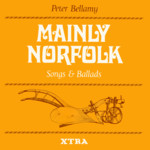
Peter Bellamy sang The Shooting of His Dear unaccompanied in 1968 on his first solo LP, Mainly Norfolk. He noted:
The Shooting of His Dear is Harry Cox’s superb variant of Polly Vaughan, a strange and ancient ballad. Perhaps when the song was born, Polly really did become a swan and only in more recent and less magical times did she herself wrap up in her apron and become a sad victim of mistaken identity and questionable eyesight.
Phoebe Smith sang Molly Vaughan in a recording made by Paul Carter and Frank Purslow in her home in Melton, Woodbridge, Suffolk, in 1969. This was published in 1970 on her Topic album Once I Had a True Love and in 1998 on the Topic anthology O’er His Grave the Grass Grew Green (The Voice of the People Series Volume 3).
Ewan MacColl sang The Fowler on his 1972 Argo LP Solo Flight. He noted:
In an informative note on this strange song, Anna Gilchrist suggests that it is “a degraded relic of something very old and that fair Mollie can trace her descent from either the swan-maiden or the enchanted white doe” of fairy tale origin.
John Maguire sang Molly Bawn Lowry in a recording made by Robin Morton in 1972 on his Leader album Come Day, Go Day, God Send Sunday. Robin Morton noted:
This song is still found widely throughout the British Isles. All versions are close to the one sung by John, though some may have one or two extra verses, including one which notes the great pleasure of the other local girls at the death of Molly who “shone above them like a fountain of snow”.
In Europe, where a similar story is told, the heroine is an enchanted woman who changes form at the setting of the sun and is mistakenly killed by her lover. Our more prosaic world seems to have rationalised away this magic element.
Molly Bawn was a favourite ballad sheet and is found set to many different tunes. John learned his version from his mother, and his tune, the same as that used by Elizabeth Cronin for Lord Gregory, carries the story very well.
Cheryl Jordan sang Polly Vaughan in 1974 on the Forest Tracks album Folk Songs From Hampshire of songs collected in 1905-09 by Dr. George B. Gardiner. John Edgar Mann noted:
One of the most popular of all folk songs and found in both England and Ireland, this was heard by Gardiner from William Bone of Medstead [VWML GG/1/17/1087] , and a Mrs. Matthews (exact locality not known) [VWML GG/1/19/1175] . The story of a young man who shoots his sweetheart in mistake for a swan, has always chilled. Purslow writes: “The supernatural appearance of Polly at her sweetheart’s trial lends weight to the theory that the song originally had connections with a mythical swan-maiden.”
Packie Manus Byrne sang Molly Bawn in a recording made by Tony Engle and Mike Yates, London, in 1974 on his 1975 Topic album Songs of a Donegal Man and in 1998 on the Topic anthology Tonight I’ll Make You My Bride (The Voice of the People Series Volume 6). Mike Yates noted:
Packie learnt Molly Bawn from Charlie Waters of Meentinadea near Ardara, Donegal, many years ago when they were both trapped in a deserted farm house at Glendown during a snow storm. The farm belonged to Packie’s sister who was away in hospital expecting a baby, and Packie and Charlie had gone there to look after the farm animals, expecting to only stay for an hour or two. A storm blew up and it was not until four days later that they were able to leave the house where they had been trapped without food or turf. In order to keep warm and cheerful Packie and Charlie had huddled together and spent the time teaching one another songs. According to A.L. Lloyd the ballad is but a remake of the Greek myth of Cephalus and Procris in which Procris, suspecting that her husband Cephalus is about to visit a mistress, hides in a thicket to watch his progress. In fact Cephalus was out hunting and, mistaking Procris for a deer, he killed her with a magic dart. Others, including P.W. Joyce and Professor Hugh Shields, have sought to identify the ballad with an actual event, albeit one which has incorporated the swan-maiden theme. Packie’s tune, in common with most that are associated with this ballad, is especially fine.
Tony Rose recorded Polly Vaughan in 1976 for his LP On Banks of Green Willow. A live recording from Eagle Tavern, New York, in 1981 was included in 2008 on his CD Exe. He noted on the original album:
There is a strong element of the supernatural in Polly Vaughan where the ghost of a young girl, shot by her sweetheart in mistake for a swan, appears at his trial to plead for his freedom. This is substantially the version collected by George Gardiner from William Bone of Alton, Hampshire, and published in Frank Purslow’s Marrow Bones.
Frankie Armstrong sang Polly Vaughn in 1976 on the LP Here’s a Health to the Man and the Maid. The album notes comment:
A broadside ballad found in both England and America, is known by various names (Molly Bawn, Molly Bond, The Shooting of the Deer). A young lad accidentally shoots his girlfriend. The theme can be traced back to the Greek myth of Cephalus who shoots his wife Procris, thinking she is a deer. For complete story, see A.L. Lloyd’s Folk Song in England.
Hedy West sang Molly Bawn in 1976 on her Bear Family album Love, Hell and Biscuits.
John Roberts and Tony Barrand sang Polly Vaughn in 1977 on their Folk-Legacy album Dark Ships in the Forest: Ballads of the Supernatural. They noted:
Child apparently did not think enough of this ballad to canonise it; it does not seem possible that he would not have known it. The Scot Robert Jamieson, who published his collection of ballads in 1806, characterised it as “one of the very lowest descriptions of vulgar modern English ballads.” Yet the ballad has remained popular in the tradition, and the plot shows every indication of considerable antiquity. Lloyd points out that the girl, using her apron as protection from the rain, has been identified as a modern relative of a swan maiden or an enchanted doe, Maiden by day, swan by night, hated and envied, killed with a magic gun, reappearing as a spirit to clear her lover—this is the stuff of epic fairy tales.
Our tune comes from Maine, from the book of songs, learned from her parents, authored by Carrie Grover of Bethel; our text comes from Harry Cox and A.L. Lloyd.
Gordon Tyrrall sang Molly Ban Lavery in 1978 on his Hill & Dale album Farewell to Foggy Hills. He noted:
Although this particular song is set in Ulster, it was clearly very popular in many parts of Ireland and England (where it is more commonly known as Polly Vaughan, or The Shooting of His Dear). It was ignored by some early song collectors who doubted the merit of this curious tale. There may, however, be a message for any bold fowlers listening. The word ‘cran’ means a crane or heron.
Walter Pardon sang Polly Vaughan in a Mike Yates recording made in between 1978 and 1982 that was included in 2000 on his Musical Traditions anthology Put a Bit of Powder on It, Father. Rod Stradling and Mike Yates noted:
[…] this is another extremely popular song (122 instances) all over the British Isles and USA, with a few versions found in Canada and just Sally Sloane, again, in Australia. Given the supernatural elements in some versions, it could be a very old song indeed, yet it still has enormous appeal, so that there are some 25 sound recordings—most of the English ones being from East Anglia.
Dave Burland sang The Shooting of His Dear in 1979 on his Rubber Records album You Can’t Fool the Fat Man. His version is from Maud Karpeles’ book Folk Songs of Newfoundland.
Maggie Murphy of Tempo, Co Fermanagh sang Molly Bawn to Keith Summers in McGrath’s pub, Brookeborough, Co Fermanagh in Spring 1979. This recording was included in 2004 on the Musical Traditions anthology of songs from around Lough Erne’s shore from the Keith Summers collection, The Hardy Sons of Dan. Maggie Murphy also sang Molly Bawn on her 1996 Veteran Tapes cassette and CD Linkin’ O’er the Lea. Rod Stradling basically repeated in the MT album’s booklet what he said about Mrs Puckett’s 1955 version above, adding:
It’s another extremely popular song (152 Roud instances) all over the British Isles, Ireland and USA, with a few versions found in Canada, just Sally Sloane in Australia—and none at all from Scotland. The supernatural elements found in some versions indicate that it could be a very old song indeed, yet it still has enormous appeal, so that there are some 32 sound recordings. Given its probable Irish origins, it’s surprising to find only 8 other named sources, mostly from the North.
There’s also a reel called Molly Bán—it is played by Joe Burke on Traditional Music of Ireland; the album which accompanied Breandán Breathnach’s book of the same name. There’s also another song, called Molly Bán a Stóir, which is confusing since Bán and Bawn are pronounced more or less the same.
There are two versions of the ballad on the Voice of the People series, Molly Vaughan sung by Phoebe Smith (TSCD653) and Molly Bawn sung by Packie Manus Byrne (TSCD 656), as well as recordings from Walter Pardon - Polly Vaughan (MTCD305-6), and Harry Cox - The Fowler (TSCD512D). American versions may be heard by Dan Tate (MTCD321), Phyllis Marks (Augusta Heritage cassette 008) and Hazel Stover (Augusta Heritage 009).
Dan Tate sang Molly Van at his home in Fancy Gap, Carroll County, Viginia on 66 August 1979 to Mike Yates. This recording was released in 1983 on the Home-Made Music anthlogy of Blue Ridge Mountain music from Virginia and North Carolina, Appalachia – The Old Traditions Volume 2, and in 2002 on the Musical Traditions anthlogy of songs, tunes and stories from Mike Yates’ Appalachian collections, Far in the Mountains Volume 1.
The Oyster Band sang Molly Bond in 1986 on their Cooking Vinyl album Step Outside. A live recording from 12 December 2003 at The Forum, London, was released in 2005 on their Westpark album The 25th Anniversary Concert. And June Tabor and Oysterband sang Molly Bond on their 2019 tour memento album Fire & Fleet.
Tim Laycock sang The Fowler on the 1989 cassette Broadside: Songs From the Land of the Broads. The album’s inlay noted:
A traditional Broadland song, again collected from Harry Cox. This supernatural ballad, also known as Polly Vaughan, contains the old expression “in the room of a swan”, which, in this context, means “in mistake for a swan”. The ethereal atmosphere on this track is created by Tim’s duet concertina with the hammer dulcimer and oboe playing of Annie Clark.
Patti Reid sang The Fowler in 1992 on the Fellside anthology of English traditional songs, Voices. Paul Adams noted:
This is another old story and seems to be based upon an old Celtic folk tale, An Cailin (The Fair Girl). The story simply is that of a jealous girl who thinks that her lover is going to meet someone else when he goes out shooting. She disguises herself as a swan to follow him. The theme, of course, finds it way into the ballet, Swan Lake. Although alterations have crept in, Patti’s version is loosely based on that collected from Harry Cox of Yarmouth, Norfolk.
Norman Kennedy sang Molly Baun at live concerts in Aberdeen over two weekends in 1996. The recordings from these concerts was included in 2002 on his Tradition Bearers album Live in Scotland. He noted:
I got this from an Irish singer I heard at Annie Johnson’s house up the glen in Castlebay, Barra, in the 1950s.
Julie Murphy sang Polly Vaughan in 1999 on her Beautiful Jo album Black Mountains Revisited.
Carnival of Souls sang Polly Vaughn on their 2000 album Carnival Oddities.
Bluehorses sang Molly Bond on the 2002 charity compilation Huntingdon Folk 3.
Chris Foster sang The Fowler in 2003 on his Tradition Bearers CD Traces. He noted:
Passed on to me by Gail Williams, this one originally came from the Norfolk singer Harry Cox. In just five verses it tells a huge story and even more.
Alasdair Roberts sang Molly Bawn on his 2005 CD No Earthly Man. He noted:
This is an Irish variant of the well-known ballad more commonly known as Polly Vaughan, learnt from a 1974 recording of the Donegal singer Packie Manus Byrne. Some of the words have been altered. The ballad dates from at least the mid-17th century, and although it is most frequent in Ireland, variants have been found throughout the British Isles as well as in North America and the Antipodes.
Bill Whaley and Dave Fletcher sang Polly Vaughan in 2005 on the Fellside anthology celebrating English traditional songs and their American variants, Song Links 2; the corresponding American version on this double CD is Molly Varne sung by Kieron Means. Paul Adams noted:
People have theorised endlessly about the origins of this widespread favourite song Polly Vaughan, or The Shooting of His Dear,and some think it’s connected to the ancient and erotic story of Leda and the Swan. In its more recent forms it is a murder ballad, but far from straightforward. A young woman, caught out in a shower of rain, wraps her white apron around her to keep dry. Her sweetheart, who is out hunting at the time, mistakes her for a swan, and shoots and kills her. He stands trial for killing Polly, but her ghost appears and confirms his story. Cecil Sharp wrote in The Journal of The Folk Song Society (No.6, Vol.II 1905), “I would hazard that the ballad is the survival of a genuine piece of Celtic, or still more probably, of Norse imagination”. Lincolnshire singers Bill and Dave sing a compilation of two versions collected by George Gardiner in Medstead, Alton, Hampshire in November 1907 from William Bone, and from Mrs Matthews of Hampshire (exact locality unknown) in August 1908.
and:
This New England version of Polly Vaughan comes from the northeast coast of America, collected by Carrie Grover, near Bethel in the state of Maine. Carrie Grover, who had English, Scots, Irish and Welsh ancestors, heard this sung by both her mother and her father. She lived in a community where singing was an important part of everyday life. She tells how her grandmother sang at the spinning-wheel: “She would spin and sing all day long, and never sing the same song twice. If a stranger came to the house or to one of our neighbourhood gatherings, it was considered a breach of good manners not to ask him to sing.”
In Carrie Grover’s collection, the song is called Molly Bawn—but the folk process has been at work again, and Kieron Means knows it as Molly Varne.
It is a ballad that was found widely in America. This version retains the verse about how glad the local girls are that Polly is dead, jealous of her beauty that shone out like a fountain of snow, or as in this case, a mountain of snow.
Dan Quinn sang Molly Bawn in 2005 on Duck Soup’s eponymous album Duck Soup. They noted:
Based on a recording of Maggie Murphy of Tempo, Co. Fermanagh.
Craig Morgan Robson sang Polly Vaughn on their 2006 CD Stranded. They noted:
Collected by Gardiner from William Bone of Medstead, Hampshire, in 1907 [VWML GG/1/17/1087] . There are numerous versions of this ballad, which contains possibly the world’s worst excuse for manslaughter—or in this case woman-slaughter. It has been collected in several English counties as well as Ireland and America. Jamieson (Popular Ballads and Songs, 1806) described the song as “one of the very lowest description of vulgar English ballads”, but other collectors have suggested that it derives from one or more of the many folktales of animal transformation.
Mary Humphreys and Anahata sang Polly Vaughan in 2006 on their WildGoose CD Fenlandia. Mary Humphreys noted:
Cecil Sharp collected the tune from Martha Badley of North Petherton, Somerset in 1907 but she sang only one verse that was uninformative about the story. I sought out other Sharp versions (including one from Louie Hooper and Lucy White) from which I collated a text that covered the whole story.
Seth Lakeman sang The Setting of the Sun in 2006 on his iScream album Freedom Fields. This track was also included on the BBC Radio 2 Folk Awards 2006 compilation. Seth Lakeman noted on his album:
A young man is haunted by the lover he mistook for a swan.
Martha Tilston recorded Polly Vaughan in 2006 for her CD Of Milkmaids & Architects. This YouTube video shows her at Acoustic Routes, in the Cellar of CB2 Cambridge, in April 2008:
Jim Causley sang Polly Vaughn in 2007 on his WildGoose CD Lost Love Found. He noted:
I first discovered this gorgeous version of the song on Shirley Collin’s album The Sweet Primeroses. The words were collected in the Appalachians by Cecil Sharp and the enchanting melody was written by Shirley herself. Anyone familiar with the English versions of this song (such as Harry Cox’s epic version) will notice it’s a trifle shorter as it doesn’t feature the whole Jimmy’s trial and Polly’s ghost bit. But I don’t mind that as it gets to the point a lot quicker! I’d like to dedicate this song to ‘Old Bean’ Roger Edwards who has given me great encouragement throughout my career and makes me sing this song annually at the English Country Music Weekend.
Bella Hardy sang Molly Vaughan on her 2007 CD Night Visiting.
Bonnie ‘Prince’ Billy sang Molly Bawn on his 2008 CD Is It the Sea?.
Martin Graebe sang The Setting of the Sun in 2008 on his and Shan Graebe’s WildGoose album Dusty Diamonds. This track was also included in 2016 on their WildGoose compilation Calm and Collected. They noted:
Another song from the remarkable Samuel Fone, of Mary Tavy. In this case an unusual version of a song widely spread through Britain and Ireland.
Michelle Burke learned Molly Bawn from the singing of Elizabeth Cronin. She sang it on her 2009 CD Pulling Threads.
Jon Boden sang Polly Vaughan as the 17 August 2010 entry of his project A Folk Song a Day. and in 2024 on Ben Nicholl’s Hudson album Duets. He noted in the project’s blog:
Very interested in the idea that this might be a remnant of a shape shifting myth, rather than a song about bad eyesight. Interesting in reference to blacksmith ballads and the lay of Völundr.
The Jones Boys sang The Fowler on their 2010 album Like the Sun A-Glittering. Gordon Jackson noted on their website:
This version is largely from Martin Carthy (and why not). However, MC calls our male protagonist ‘Jimmy’, whilst Norfolk farm worker and singer, Harry Cox, who recorded the song in 1959, aged 74, called the young man ‘Jimma’; I decided to follow the venerable Mr Cox.
There are immensely detailed notes on this song, in all its several versions and with all its several titles, here [Note: a reference to this page].
One of those other versions is called Molly Bawn. ‘Bawn’ is obviously an anglisisation of the Irish word ‘bán’ (pronounced ‘bawn’), meaning ‘white’ or ‘pale’. I mention this because, although I haven’t seen a version of the song called ‘Molly Bán’, there is a really nice reel of that name.
Laura Hockenhull sang Molly Bond on The Long Hill Rambler’s 2012 EP Downs Barn Demo and 2014 CD Beauty and Butchery. They noted:
There are many versions of this song, called things like Molly Bawn or Polly Vaughn. Some in the band think the plot, concerning a woman shot and killed by her boyfriend when he mistakes her for a swan, is far-fetched; others suspect it happens every day. We got our lyrics and this delicate melody from the unaccompanied singing of Peggy Seeger on her 2008 album Bring Me Home.
Andy Turner sang The Setting of the Sun as the 2 February 2013 entry of his project A Folk Song a Week. He noted in his blog:
This is quite the jolliest version of Polly Vaughan that I’ve come across.
Dave Parry introduced me to the song, which he’d found in Sabine Baring-Gould’s Songs of the West (the 1905 edition, for which Cecil Sharp acted as musical editor). Baring-Gould collected the song on 12 July 1893 from Sam Fone of Mary Tavy in Devon. The words as printed in Songs of the West struck me at the time as having been rewritten and unnecessarily prettified by Baring-Gould, and now that we can see the original—thanks to Martin Graebe and the Vaughan Williams Memorial Library—I think my suspicions are confirmed. In any case, I retained only the tune, first verse and chorus, with the remaining verses taken from what I’d probably consider the definitive version of this song, from the great Harry Cox.
Incidentally, I’ve always thought that the “I shot my true love because I thought she was a swan” argument a rather dodgy line of defence. Wasn’t killing one of the Queen’s swans a crime which was subject to fairly severe penalties?
Mishaped Pearls sang Jimmy on their 2014 album Thamesis.
You Are Wolf (Kerry Andrew) sang Swansong (Molly Bawn) in 2014 on their album Hawk to the Hunting Gone.
Rachael Dadd sang Polly Vaughan in 2015 on the anthology of songs from the repertoire of Shirley Collins, Shirley Inspired….
Lucy Farrell and the Furrow Collective sang Polly Vaughn in 2016 on their second album, Wild Hog. They noted:
Lucy learnt this song from the singing of the Norfolk Singer Harry Cox, who called it The Fowler. Although the Scottish antiquary Robert Jamieson, who published the song in his Popular Ballads and Songs (1806), commented that it was “indeed a silly ditty, one of the very lowest descriptions of vulgar English ballads” later scholars have argued that the song, with its elements of magical animal transformation and mistaken identity, in face preserves fragments of some ancient myth. A.L. Lloyd, for example, argued that the ballad can be tracked back to the Greek myth of Cephalus and Procris, which can be found in Ovid’s Metamorphoses; the hunter Cephalus, seeing his wife hiding in a thicket, mistakes her for a deer and kills her with a magic dart. Polly Vaughn is mistaken for a swan rather than a deer in this incarnation of the tale.
Jackie Oates and Megan Henwood sang Setting of the Sun on their 2016 EP Wings.
The Shackleton Trio sang Molly Vaughan on their 2016 album The Dog Who Would Not Be Washed.
Corwen Broch and Kate Fletcher sang The Fowler on their 2017 CD Fishe or Fowle. They noted:
A sad tale with possible ancient roots in British and Irish tales of maidens who could transform into swans. “in the room of” is dialect for “in the place of”.
Collected from William Bone of Medstead, Hampshire, in 1907 and Mrs Matthews also of Hampshire in 1908 by H. Gardiner.
Olivia Chaney sang Polly Vaughan in 2019 on Topic’s 80th year anthology, Vision & Revision. She noted:
I grew up listening to the mystical power of Anne Briggs’ voice. A family myth is that my Dad heard her singing barefoot on stage somewhere in Reading back in the day, but being the mid-60s, we’ll never be quite sure. Her renditions, arrangements and originals are profound and haunting to me. The poetic story and melody of Polly Vaughan have always appealed, and combined with Anne’s declamatory gift are particularly potent. I love the song’s distant echo of tales as old as Ovid’s Metamorphoses, albeit with a contemporary twist. Thank you Annie and Topic Records for these fine recordings that have inspired so many of us.
Alex Cumming sang Polly Vaughan on their 2020 download album Isolation Sessions: The Songs and on their 2024 album Homecoming. They noted on the first album:
A tale of mistaken identity with death and ghostly figures.
and on the second:
This song was one of the key songs on my folk singing journey. I remember just being so fascinated by the melody, ornaments and lyrics, and there was a true sense of excitement once I had learned to sing it the way I wanted. I learnt this song from Sandra Kerr, during my first year at Newcastle University, studying on the Folk and Traditional Music Degree back in 2011.
Jon Wilks recorded The Fowler for a February 2022 download single and sang it on his 2023 album Before I Knew What Had Begun I Had Already Lost. He noted:
The Fowler is a differently-titled version of Polly Vaughan, which I learned from a recording of the source singer, Harry Cox, singing it at the Windmill pub in Norfolk during the 1940s. The lyrics are about as odd as you might expect of a song about a man mistaking his beloved for a swan, but that melody… my word. What a treat that is to sing.
Ruth Hazleton sang Molly Baun Lavery on her 2025 album Heronbones. She noted:
This version of Molly Baun comes from Australian-born source singer Sally Sloane (first recorded by folklorist John Meredith), who inherited an enormous repertoire of song and dance tunes from her Irish grandmother Sarah Alexander.
A very widely known traditional song throughout Ireland, the UK and America, scholars broadly agree that it originated in Ireland, alongside evidence to suggest that the song may be based on an historical event. The imagery of this song struck me deeply as a child, leaving me puzzled that a woman’s apron could be mistaken for a swan and therefore result in her accidental shooting.
I have used Sally’s original melody to frame the tale but deviated in sections to embellish the enormous tragedy of the story. This song is also known as The Shooting of His Dear / Molly Bawn / Polly Vaughan / The Fowler.
Lyrics
Harry Cox sings Polly Vaughan
So come all you bold sportsmen that carry a gun,
I will have you go home by the light of the sun, —
For young Jimmy was a-fowling, was a-fowling alone,
When he shot his own true-love in the room of a swan.
So the first he went to her and found it was she,
He was shaking and tremb-e-ling, his eyes scarce could see.
“So now you are dead, love, and your sorrows are o’er;
Fare thee well, my dear Polly, I shall see you no more.”
Then home went young Jimmer with his dog and his gun
Saying: “Uncle, dear Uncle, have you heard what I’ve done?
Curs-ed be this old gunsmith that made me this gun,
For I’ve shot my own true-love in the room of a swan.”
Then out come bold uncle with his locks hanging grey —
Saying, “Jimmer, dear Jimmer, don’t you run away.
Don’t you leave your own count-e-rie til the trail comes on,
For you ne’er shall be hanged for the crime you has done.”
Now the trial came on and pretty Polly appear,
Saying, “Uncle, dear Uncle, let Jimmer go clear,
For my apron was wrapped round me when he took me for a swan,
And his poor heart lay bleeding for Polly his own.”
Séamus Ennis sings Molly Bawn
immy went fowling with his dog and his gun,
Fowling all day until the night it came on,
He met with his true love and took her for a swan,
And he shot his Molly Bawn by the setting of the sun.
Jimmy went home with his gun in bis hand,
Sad and brokenhearted as you may understand,
He said to his father, “I took her for a swan,
But O and alas it was my own Molly Bawn.”
It wasn ’t six months after to her uncle she appeared,
Crying, “Uncle, dear uncle, don’t think to shoot my dear,
With my apron all around me he took me for a swan.
And he never would have murdered his Molly Bawn.”
Louis Boutilier sings As Jimmy Went A-Hunting
As Jimmie went a-hunting
with his dog and his gun,
He hunted all day
till the night it came on.
By her apron being round her
and I took her for a swan,
And I shot Mollie Laura
by the setting of the sun.
Away to his father
he quicklie did run,
Saying, “Father, dearest father
do you know what I’ve done?
By her apron being round her
and I took her for a swan,
And I shot Mollie Laura
by the setting of the sun.”
Up spake his aged father
whose locks have been grey,
Saying, “Jimmie, dearest Jimmie,
do not you run away.
But stay in your own counteree
till your trial do come on,
And you never shall be transported
by the setting of the sun.”
’Twas early the next morning
to her uncle she did appear,
Saying, “Uncle, dearest uncle
see that Jimmie goes clear.
By my apron being round me
and he shot me in the dark,
And it’s to his great grief now
that he never missed his mark.”
“My acushla averneen,
O it’s cushla macree,
If you were a-living
it is married we would be.
But since you are dead and buried
my poor heart it will break,
Through the lonely woods and valleys
I will wander for your sake.”
Elizabeth Cronin sings Molly Bawn
Jimmy went out fowling with his gun in his hand,
A-fowling all day, as you may understand.
His sweetheart being out walking, he took her for a swan,
And he shot his Molly Bawn at the setting of the sun.
Jimmy he went home with his gun in his hand,
And sad and broken-hearted, as you may understand,
Saying, “Father, dearest father, you know what I have done?
I have shot my Molly Bawn in the setting of the sun,”
Then up and spoke his father, although his locks were grey,
Saying, “Son, dearest son, do you not think of going away.
Stay in this country until your trial is on,
And you never will be hanged for the shooting of a swan.”
Then, “Molly, dearest Molly, you’re my joy and heart’s delight,
And if you had lived, my dear, I’d make you my bride.
But now, as you are gone to me, I’ll sail away and mourn,
And soon I will be following you, my own Molly Bawn.”
It was in three weeks after, to her father she appeared,
Saying, “Father, dearest father, don’t think to shoot my dear.
My white apron being around me, he took me for a swan,
And he shot his Molly Bawn at the setting of the sun.”
A.L. Lloyd sings The Shooting of His Dear (78rpm HMV record)
Come all you young fellows that carry a gun,
I’ll have you come home by the light of the sun.
For young Jimmy was a fowler, and a-fowling alone,
When he shot his own true love in the room of a swan.
As Polly went out in a shower of hail,
She crept unto the bushes herself to conceal
With her apron thrown over her, and he took her for a swan,
With a shot in the dark he killed Polly his own.
Then home rushed young Jimmy with his dog and his gun,
Crying, “Uncle, dear uncle, have you heard what I’ve done?
O cursed be that old gunsmith that made my old gun,
For I’ve shot my own true love in the room of a swan!”
Then out rushed bold uncle with his locks hanging grey,
Crying, “Jimmy, dear Jimmy, don’t you run away.
O don’t you leave your own country till your trial do come on,
For they never would hang you for shooting a swan.“
Now the girls of this country, they’re all glad we know,
To see Polly Vaughan a-lying so low.
You could gather them into a mountain, you could plant them in a row,
And her beauty’d shine among them like a fountain of snow.
Well, in six weeks time the assizes were on
And Polly did appear in the form of a swan,
Crying, “Uncle, dearest uncle, let Jimmy go clear,
For he never should be hung for shooting his dear.”
A.L. Lloyd sings Polly Vaughan (World Library of Folk and Primitive Music: England)
Come all you young fellows that carry a gun,
I’ll have you come home by the light of the sun.
For young Jimmy was a fowler, and a-fowling alone,
When he shot his own true love in mistake for a swan.
As young Polly went out in a shower of rain,
She hid under the bushes her beauty to gain.
With her apron thrown over and he took her for a swan,
He aimed and he fired, shot Polly, his own.
Well, home run young Jimmy with his dog and his gun,
Crying, “Uncle, dear uncle, have you heard what I’ve done?
O cursed be that old gunsmith what made my old gun,
For I’ve shot my own true love in mistake for a swan!”
Well, the funeral of Polly it was a brave sight,
With four-and-twenty young men and all dressed in white,
And they carried her to the graveyard and they laid her in the grave,
And they said, “Farewell Polly,” and went weeping away.
Mrs J. (Florence) Puckett sings Jimmy Randal
Jimmy Randal went a-hunting
all alone in the dark
He shot Molly Vaughan
and he missed not her heart
He ran up to her
and he found she was dead
And over her bosom
a-many a tear he shed
“I’ve shot that fair damsel
O the joy of my life
I always intended
to make her my wife”
Up stepped Jimmy’s father
whose locks were turning grey
Says, “Jimmy, dear Jimmy
do not run away
’“tay with your own country
till your trial comes on
You will never be punished
for shooting Molly Vaughan”
The day of Jimmy’s trial
molly’s ghost did appear
Says, “Gentlemen of the jury
Jimmy Randal goes clear”
All of the city girls
were placed in a row
Molly Vaughan shone among them
like a mountain of snow
Shirley Collins sings Polly Vaughan
Come all you young fellows that follow the gun
And beware of sharpshooting by the light of the moon.
Young Polly, she was a-walking in a shower of rain
And she hid by the bushes her beauty to maintain.
Young Jimmy, he was a-fowling, a-fowling all alone,
When he shot his own true love in the place of a swan.
O Jimmy, dear Jimmy, don’t you see what you have done?
And his poor heart lies bleeding for Polly his own.
Now the girls of this country they’re all glad, I know,
To see Polly Vaughan a-lying so low.
You could stand them on a mountain and stand them all in a row,
And her beauty it would shine for line a fountain of snow.
Anne Briggs sings Polly Vaughan
Come all you young fellows that handle a gun,
Beware how you shoot when the night’s coming on.
For young Jimmy met his true love, he mistook her for a swan,
And he shot her and killed her by the setting of the sun.
As Polly was walking all in a shower of rain,
She sheltered in the green bush her beauty to save.
With her apron throwed over her, he mistook her for a swan,
And he shot her and killed her by the setting of the sun.
Then home ran young Jimmy with his dog and his gun,
Crying, “Uncle, dear uncle, have you heard what I done?
I met my own true love, I mistook her for a swan,
And I shot her and killed her by the setting of the sun.”
Then out rushed his uncle with his locks hanging grey,
Crying, “Jimmy, oh dear Jimmy, don’t you run away.
Don’t leave your own country till the trial do come on,
For they never will hang you for the shooting of a swan.”
O the girls of this country they’re all glad, we know,
To see Polly Vaughan brought down so low.
You could take them poor girls and set them in a row,
And her beauty would outshine ’em like a fountain of snow.
Well, the trial were on and Polly’s ghost did appear,
Crying, “Uncle, dear uncle, let Jimmy go clear,
For my apron was thrown round me, he mistook me for a swan,
And he never would have shot his own Polly Vaughan.”
Sara Cleveland sings Molly Bawn
Come all you young hunters who follow the gun,
Beware of late shooting by the setting of the sun.
Jimmy Randall, the squire, was a-fowling in the dark;
He aimed at his true love and ne’er missed his mark.
Being late in the evening when the shower came on,
She ran under a green bush the shower to shun.
With her apron around her, he took her for a swan,
But, O and alas, wasn’t she Molly Bawn?
He went to his home and he threw down his gun,
Crying, “Uncle, dear Uncle, I have shot Molly Bawn.
I’ve shot that fair maiden, the pride of my life.
It was my intention to make her my wife.”
“O Jimmy, dear Jimmy, to be sure it is grief,
But you shall not be punished for the loss of Molly.
Pray stay you at home till your 1trial comes on;
You will not be banished till I lose all I own.”
The night before the trial her ghost did appear,
Saying, “Father, dear father, Jimmy Randall shall go clear,
With my apron around me, he took me for a swan,
But, O and alas, wasn’t I Molly Bawn?”
The girls of old England were all very glad
That the 1flower oi Killarney was shot and killed dead.
If we gather them together and stand them in a row,
Molly Bawn will shine among them like a mountain of snow.
Martin Carthy sings The Fowler
Come all you young fellows that follow the gun,
I’ll have you not go out by the light of the sun.
For young Jimmy was a fowler and a-fowling all alone
When he shot his own true love in the room of a swan.
Then it’s home went young Jimmy with his dog and his gun,
Saying, “Uncle dear uncle, do you see what I’ve done,
O cursed be that old gunsmith who made me my gun
For I’ve been and shot me true love in the room of a swan.”
Then out came his uncle with his locks hanging grey,
Saying, “Jimmy, dear Jimmy, don’t you run away.
And don’t you leave your own country till your trial it come on,
For you never will be hanged for the shooting of a swan.“
All the girls in this country, they’re all glad we know,
For to see pretty Polly and lying so low.
O you could pile them into a mountain, you could line them all in a row,
And her beauty would shine among them like a fountain of snow.
Now the trial it came on and pretty Polly did appear,
Saying, “Uncle, dear uncle, let Jimmy go clear,
For with me apron thrown over me he took me for a swan,
And his own love lay bleeding for it was Polly his own.”
Peter Bellamy sings The Shooting of His Dear
Come all you young fellows as handle a gun,
I will have you go home by the light of the sun.
For young Jimmy was a-fowling, was a-fowling all alone,
And he shot his own true love in the room of a swan.
When first he went up to her and found it was she,
He was shaken and a-trembling, his eyes scarce could see.
“Well now you are dead, love, and your sorrows are all o’er,
Fare the well, my dear Polly, I will see you no more.”
Then home went young Jimmy with his dog and his gun,
Crying, “Uncle, dear uncle, have you heard what I’ve done?
O cursed be that old gunsmith who made my own gun,
For I shot my own true love in the room of a swan.”
Then out come old uncle with his locks hanging grey,
Saying, “Jimmy, dear Jimmy, don’t you run away.
Don’t you leave your own country till your trial it do come on,
For they never will hang you for the crime you have done.”
O the girls of this country they’re all glad, we know,
To see Polly Vaughan brought down so low.
You could take them poor girls and set them in a row,
And her beauty would outshine ’em like a fountain of snow.
Well, the trial die come on, pretty Polly did appear,
Crying, “Uncle, dearest uncle, let Jimmy go clear,
For my apron was wrapped round me when he took me for a swan,
And his poor heart lay bleeding for Polly his own.”
[spoken:] Polly his own
John Maguire sings Molly Bawn Lowry
Come all you late fowlers that carry a gun
Beware of late fowling in the dark of the sun
Beware of late fowling, when what happened of late
It was Molly Bawn Lowry and hard was her fate
She being coming from her uncle’s when a shower came on
Went under a green bush the shower to shun
With her apron all round her I took her for a swan
But to my misforkion I shot Molly Bawn
I stepped up to her with my gun in my hand
My limbs they grew feeble and my eyes could not stand
I wiped her fair temple till I found she was dead
And a fountain of tears for my darling I shed
I ran home till my father with my gun in my hand
Saying, father dear father, do you know what I done
I shot Molly Bawn Lowry, the pride of Athlone
That lovely wee lassie I intended my own
She being coming from her uncle’s when a shower came on
She went under a green bush the shower to shun
With her apron all round her I took her for a swan
But to my misforkion I shot Molly Bawn
Out bespoke my old father, his old locks were grey
O son, dear son, you do not go away
Don’t leave your own country till the sizes comes on
You ne’er will be hanged for shooting a swan
O the day of her funeral it was a grand sight
Till see four and twenty of them and them all dressed in white
Bore her on their shoulders, laid her in her clay
They turned their backs and they all walked away
But take four and twenty of them, put them all in a row
And her beauty shines round them like a fountain of snow
Now since it’s decreed for that I was her doom
That I was her butcher instead of her groom
There is no other breathing that e’er I will take
I will travel this world (spoken) my soul for to make
Tony Rose sings Polly Vaughan
One midsummer’s evening, the sun being gone down,
Young Polly went walking by the side of a pond.
She sat under the shady trees, the showers for to shun,
With her apron wrapped around her, as white as a swan.
Young Willy went hunting with his dog and his gun,
Young Willy went hunting as the evening came on.
Down among those green rushes, as the evening came on,
He shot his own true love in the room of a swan.
And when he’d seen what he’d done away he did run
Crying, “Father, dear father, do you see what I’ve done?
Down among those green rushes, as the evening came on,
I shot my own true love in the room of a swan.”
“Stay at home, dear Willy, till your trial do come on,
That you may not be banished to some far land.
On the day of your trial your father will appear
With a hundred bright guineas if that will you clear.”
On the day of the trial young Polly did appear,
Crying, “People, oh people, let Willy go clear,
Down among those green rushes, as the evening came on,
He shot his own true love in the room of a swan.”
Walter Pardon sings Polly Vaughan
Come all you young sportsmen who carry a gun
I’d have you go home by the light of the sun
Young Jimmy was out fowling by the moon
When he shot his own true-love in room of a swan.
Then straight to his Uncle young Jimmy did run
O Uncle, dear Uncle, have you heard what I’ve done
Curse that old gunsmith who made me this gun
For I’ve shot my own true-love in room of a swan.
Then out come old Uncle with his locks hanging grey
O Jimmy boy, Jimmy, don’t you run away
Don’t you leave the old country ’til the trial comes on
For they never shall hang you for shooting a swan.
Maggie Murphy sings Molly Bawn
In the county of Derry
where I was born and reared,
Around me a place
called me wild roving blade.
I courted a wee girl
and she proved mine,
For the world would have blamed me
had I left her behind.
For Molly went out
in a shower of hail,
And under a greedler
herself did conceal.
For Johnny being out shooting
he did not miss his mark,
But oh and alas
he shot her in the dark.
When Johnny went over
and saw she was dead,
A river of tears
in her bosom he shed.
Saying, “Molly, lovely Molly,
I never intended that.
For I never but intended
in making you my wife.”
For Johnny went home
with the gun in his hand,
Saying, “Father, dear father,
I’ve shot Molly Bawn.
With her white apron round her
I took her for a swan,
But oh and alas
it was my Molly Bawn.”
His father coming down
and his locks they were grey,
Saying, “Son, dearest son, dear,
in your own country stay.
Stay in your own country
’til your trial comes on,
And you never shall be taken,
shoot a lass on my land.”
But the night before the trial,
Molly’s ghost did appear,
Saying, “Uncle, dear Uncle,
Johnny Rundles I clear.
With my white apron round me
he took me for a swan,
But oh and alas
it was I, Molly Bawn.”
All the girls of the country,
they seemed to be pleased
For to hear of Molly’s misfortune,
the sad end she came to.
But all the girls of the country,
put them all in a row,
Molly Bawn would shine through them
like a diamond in snow.
For I shot that fair creature,
the flower of Dunmann,
I have shot that fair creature,
I have shot Molly Bawn.
With her white apron round her
I took her for a swan,
But to my great misfortune
it was my Molly Bawn.
Dan Tate sings Molly Van
Come all you young men
who handles a gun,
Beware of your shooting
just after set sun.
Jimmy Randle was a-hunting,
it was all in the dark.
He shot at his sweetheart
and he missed not his mark.
Jimmy Randle was a-hunting
and the night was coming on.
With her apron pinned around her
he shot her for a swan.
Jimmy Randle went home
with his gun in his hand.
Saying, “Mother, dear mother,
I have shot Molly Van.”
“Yes, I’ve killed this fair maiden,
and I’ve taken her life.
And I always intended
to have made her my wife.”
Come all you young women,
and stand you in a row.
Molly Vanders in the middle
as a mountain of snow.
The Oyster Band sing Molly Bond
Come all you young gallants that delight in a gun
Beware of your shooting at the setting of the sun
It happened one evening in a large shower of hail
When under a bower my love was concealed
He apron flew around her, I took her as a swan
And I shot my own darling at the setting of the sun
As I walked up to her and found it was she
My limbs they grew weary and my eyes couldn’t see
The ring on her finger, most bitterly I cried
O Molly, if you were living, you’d’ve been my fond bride
Home to my father like lightning I did run
Saying Father, dearest father, do you know what I’ve done?
Her apron flew around her. I took her as a swan
And I shot my own darling at the setting of the sun
Her apron flew around her, I took her as a swan
And I shot my own darling, and where shall I run?
His father in the corner with his hair turning grey
O my dear Jimmy, don’t you run away
Stay in this country until the trial comes on
You never shall be hung by the laws of this land
The day of the trial to the judge she appeared
As God is my witness young Jimmy must go clear
My apron flew around me, he took me as a swan
And I know his heart lies bleeding for his own Molly Bond
Chris Foster sings The Fowler
Come all you young fellows that follows the gun.
I would have you come home by the light of the sun.
For young Jimmy was a fowler who went fowling all alone
And he shot his own true love, by mistake, for a swan.
And then it’s home come young Jimmy with his dog and his gun.
Crying, “Uncle dear Uncle do you know what I have done?
O cursed be that gun smith who has made me my gun,
For I’ve been and shot my true love. I mistook her for a swan.”
Then out come his uncle with his locks hanging grey.
Saying, “Jimmy, dear Jimmy don’t you run away.
Don’t you leave your own country until your trial it comes on,
For you never will be hanged for the shooting of a swan.”
All the girls in this country they’re all pleased you know.
Just to see pretty Polly down a-lying so low.
You could stand them all on a mountain, you could put them all in a row
And her beauty would shine among them just like a fountain of snow.
Then the trial it come on and pretty Polly did appear,
Saying, “Uncle, dear Uncle let young Jimmy go clear.
With my apron thrown over me, he mistook me for a swan
And he shot his own true love, it was Polly his own.
With my apron thrown over me, he mistook me for a swan
And he shot his own true love, it was Polly his own.”
Bill Whaley and Dave Fletcher sing Polly Vaughan
One Midsummer’s evening the sun being gone down
Young Polly went a-walking by the side of a pond
She sat under a shady tree, a shower for to shun
With her apron wrapped around her as white as a swan. (×2)
Young William went a-hunting with his dog and his gun
Young William went a-hunting as the evening came on.
Down among those green rushes as the evening came on
He shot his own true love in the room of a swan. (×2)
He threw down his gun and away he did run
Crying father, dear father, can you believe what I’ve done
Down among those green rushes as the evening came on
I shot my own true love in the room of a swan (×2)
Stay at home my dearest William, ’til your trial is at hand
That you might not be banished to some foreign land
On the day of your trial your father will appear
With fifty bright guineas if that will you clear. (×2)
On the day of his trial, ghostly Polly did appear
Crying people, oh people, let William go clear
With me apron wrapped around my head as the evening came on
He shot his own true love in the room of a swan. (×2)
Kieron Means sings Molly Varne
Jimmy Randall went a-hunting all out in the dark
Shot Molly Varne and he missed not his mark
Ran to where she fell and he found that she was dead
And over her body, many a tear he shed.
Picked up his gun, to his uncle’s house did run
Crying, uncle, dear uncle, I have shot Molly Varne
Shot her and killed her, the joy of my life
I always intended to make her my wife.
Up stepped Jimmy’s father, his hair was turning grey
Saying, Jimmy, dear Jimmy, do not run away
Stay in your own country till your trial come on
You shall not be hanged for shooting Molly Varne.
The day of Jimmy’s trial, M olly’s ghost did appear
Saying, gentlemen of the jury, Jimmy Randall must go clear
All of the ladies were sitting in a row
Molly’s ghost shone among them like a mountain of snow.
Had my apron pinned around me and he took me for a swan
Shot and he killed me, his own dear Molly Varne.
Seth Lakeman sings The Setting of the Sun
Come all young fellows that carry a gun
Beware of late shooting when the daylight is done
It is my reckoning that many hazards they may run
I shot my true love at the setting of the sun.
In a shower of rain my darling did lie
All under the bushes to keep herself dry
Her head in her apron I thought her as a swan
I shot my true love at the setting of the sun.
I’ll fly from my country, I nowhere find my rest
Because I’ve shot my own true love, like a bird upon her nest
Like lead in my heart lies the deed that I have done
I shot my true love at the setting of the sun.
In the night my fair maid as a white swan appears
She says “O my true love quickly dry up those tears
I freely forgive you for this paradise that I’ve won
I was shot by my true love at the rising of the sun.”
The years they pass leave me lonely and sad
I can never love again ’cause none make me glad
I’ll wait and expect you until my work down here is done
Then I’ll meet my true love at the setting of the sun.
Jon Wilks sings The Fowler
Well, come all you bold fellows who handle a gun,
I would have you come home by the light of the sun.
For young Jimmer was a-fowling, and a fowling alone,
And he shot his own true love by the light of the sun.
When Polly was walking in a shower of rain,
Well, she stopped by a green bush, her beauty to save.
With her apron wrapped ’round her, well he’s took her for a swan,
And he shot his own true love by the light of the sun.
When first he’s come to her and he found it was she,
He was shaking and trembling, his eyes couldn’t see.
“For now you are dead love, and your sorrows are o’er,
Fair thee well my dear Polly, I’ll see you no more.”
Well, home ran young Jimmer with his dog and his gun,
Crying, “Uncle, dear uncle, d’you see what I’ve done?
Cursed be the old blacksmith who made me this gun,
’Cause I’ve shot my own true love by the light of the sun.”
Well, up spoke his uncle, his locks hanging grey,
Saying, “Jimmer, oh Jimmer, don’t you run away.
Don’t you leave this old country ’til your trial it comes on,
For you never will hang for the death of a swan.”
When his trial it’s come on Polly’s ghost did appear,
Crying, “Honour, your honour, let Jimmer go clear,
With my apron wrappen ’round me, well he’s took me for a swan.
Now his poor heart lies bleeding for Polly his own.”
Acknowledgements
Martin Carthy’s version transcribed by Garry Gillard.